On the day of his sixty-ninth birthday, Emeritus Professor Mao Mao stands quietly in the backyard of the Trinity farmhouse in Pennsylvania. The air is cool, the land wide and open, the sky a soft blue that seems to breathe with him. As he looks across the fields—fields that once sheltered his mother in her final years—memory gathers around him like a gentle wind.
Here, on this soil shaped by love, he reflects on the long arc of a family’s journey.
The Mountain Road of Early Life
His thoughts drift back to childhood in a mountain village in Puli, where their father pedaled a bicycle deep into the forest to cut timber, and their mother walked along the winding path to meet him. Sawdust scented the air; the afternoon light shimmered on the dirt road like soft gold.
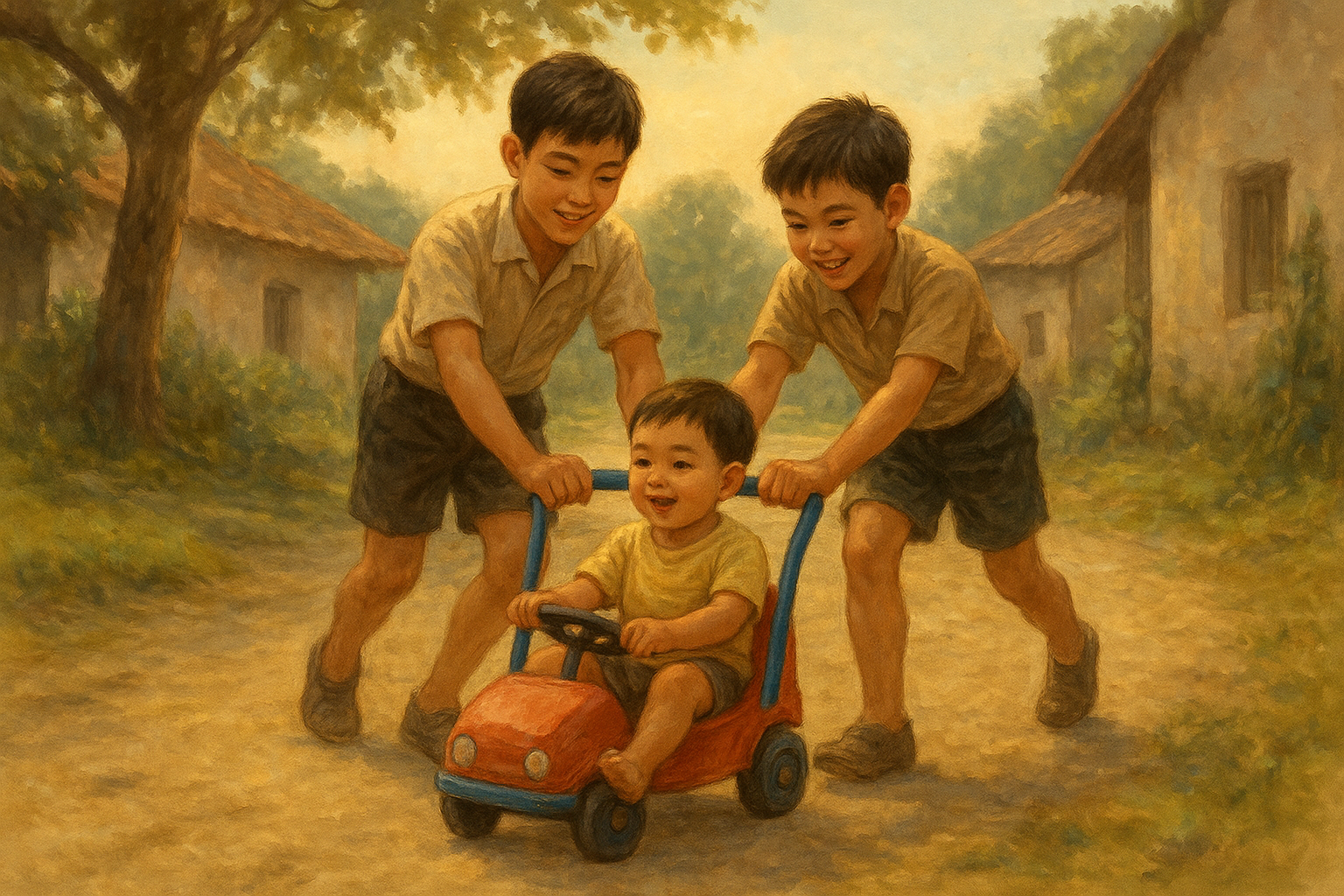
The youngest brother, barely three, rode in a toy cart pushed by the elder two. Their laughter rose into the hills—an innocence that would one day be remembered as the purest of family blessings.
Later came the years of labor and trial: mowing the lawn at the Holy Spirit Seminary, tending to their father when illness struck him twice behind Baojue Temple. These hardships forged the unbreakable bond the brothers still carry.
The Eldest Brother’s Sacrifice
When their father grew ill, the eldest brother sacrificed his own dreams, choosing the Mathematics Department at National Taiwan Normal University because its tuition was free. He bore the weight of the family so the younger brothers—Mao Mao and Bang Bang—might have the freedom to continue their studies.
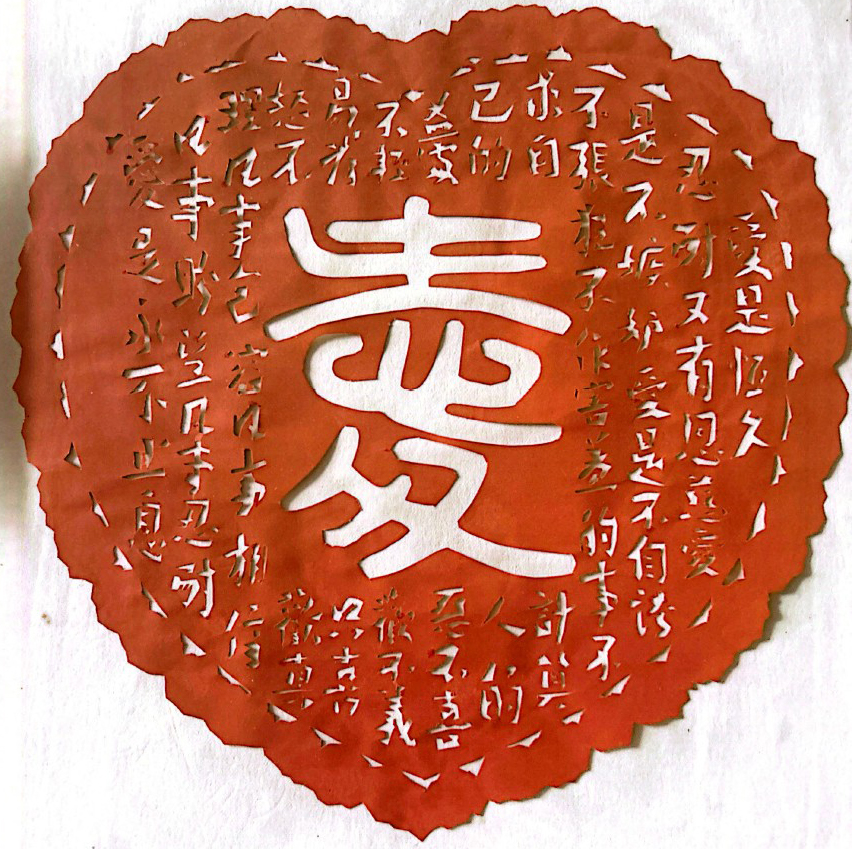
Every step Professor Mao Mao later took—from the University of Pittsburgh to his career as a scholar—carried the imprint of that devotion. His carving of the Chinese character for love remains a testament to his gratitude.
A Life of Return
Many had expected Mao Mao to remain in the United States after earning his Ph.D. in 1989. But he returned to Taiwan. He returned for family, for duty, for the promise he and Bang Bang had made—to care for their parents so the eldest brother could walk a life unburdened.
His return became one of the defining choices of his life, a gesture of loyalty that echoes across decades.
A Mother’s Strength and a Difficult Decision
Their father passed away on March 25, 1995, and was laid to rest in the serene Yuanlin Catholic Cemetery in Taiwan. For twenty-seven years he rested there, watching over the family from afar.
After his passing, their mother carried her love across oceans. Until 2019, she traveled to the United States each year, tending lovingly to her grandchildren, nurturing them with the same dedication she had shown her sons. She found joy in gardens—coaxing vegetables from soil with her gentle hands and in the careful rhythm of knitting, each stitch a quiet offering of care.
But by 2018, it became clear that one brother alone could no longer shoulder the full weight of her care in Guam. Recognizing this, the three brothers acted together: they brought their 88-year-old mother to Pennsylvania, to live with the eldest brother’s family.
The following year, in 2019, they purchased the Trinity farmhouse, a place where love could be made practical. Here she lived, tended, and cherished until her passing in Pennsylvania on June 4, 2022. And on September 17, 2022, she was reunited with her husband in the Yuanlin Catholic Cemetery — a reunion twenty-seven years in the making.
At 69: A Reflection in the Backyard
And now, on his sixty-ninth birthday, Professor Mao Mao stands in the quiet expanse behind the Trinity farmhouse. The land their mother walked upon, the land the brothers tended together, lies peaceful before him.
He sees in its fields the long story of his life: the laughter of three brothers in a Puli village, the sacrifices made without hesitation, the promises kept across oceans, the years of care given in love’s name, the parents reunited in eternal rest, and the brothers — still three, still one continuing the legacy.
At 69, he understands that a life’s worth is not measured merely in accomplishments, but in devotion—in the courage to return home, in the willingness to carry one another, in the steadfast love that does not fade with years, or distance, or loss.
And so, beneath the open sky of the Trinity farmhouse, he offers his silent reflection:
Everything that endures is love.
Everything that returns is family.
Everything that matters has already been given.